
PARTNERS IN PARENTING

Partners in Parenting: Trauma Experience (PiP-TEx)

PiP-TEx is a new version of the award winning, evidence-based online program, ‘Partners in Parenting’. The program is designed to support parents of teens who are experiencing anxiety and/or depression after a traumatic experience, by equipping parents with strategies to improve their parenting confidence and support their teen's mental health. The program is online and involves interactive modules and online coaching sessions.

Family
Successful Delivery
What is trauma?

PiP-TEx refers to trauma as an intense emotional response to a terrible event, typically involving a threat to an individual's sense of safety or security (e.g., accident, abuse, or natural disaster), or a significant loss (e.g., the sudden or unexpected death of a loved one, or the destruction of a home).

While trauma can result from a single major event, it may have also developed over time from ongoing or repeated stressors that, on their own, may not seem “traumatic” but together can overwhelm a teen’s ability to cope.

Evidence-based online program

PiP-TEx content is based on:

  • High quality research evidence
  • Expert consensus including new content about supporting teens following a traumatic experience
  • Consultation with parent advocates with experience representing families caring for a teen after a traumatic experience
  • Input from experts in the field of youth mental health, parenting, and trauma
More Resources
1,500+ families helped

Our research trials with over 1,500 Australian parents show that PiP is effective, with benefits for both parents and teens.

If you’d like more information about the evidence for our programs, feel free to contact us.

Who is this program for?

Parents/guardians of teens aged 12-18 who:

  • Are concerned about their teen’s anxiety and/or depressive symptoms following a traumatic experience
  • Live in Australia
  • Are fluent in English
  • Have regular internet connection

The program is not recommended as a sole intervention for trauma-related disorders such as Post-Traumatic Stress Disorder (PTSD).

Is there anyone who can’t take part in the program?

The program is not suitable for families in the following circumstances where:

  • The teen is currently in an unsafe environment related to their trauma, for example living with the perpetrator of their abuse,
  • The participating parent is the perpetrator of their teenager’s trauma,
  • Where the teenager is experiencing a mental health difficulty that needs to be prioritised (e.g. complex PTSD, eating disorder, substance use disorder, or they need to be in hospital for inpatient treatment).

In the above circumstances, the PiP-TEx program is unlikely to provide the type or level of support appropriate for the young person and family.

Contact us
Target
Successful Delivery
What’s in store for you?

PiP-TEx aims to empower you to support your teen’s mental health following a trauma experience. This program includes practical, evidence-based and expert-endorsed strategies designed to build your skills and confidence.

Introductory video

Watch this short video to learn more about the PiP-TEx program.

Read transcript
What does the program include?
  • An online assessment with personalised personalised feedback about your parenting
  • Up to 12 online modules with practical strategies to support your teen
  • Up to 8 one-on-one coaching sessions with a parenting coach via Zoom
Access up to 12 interactive online modules

We will recommend you modules to complete, but you can choose extra modules you want to do.

Trauma can impact your teen’s ability to cope. Understanding the effects of trauma can help you find the best ways to support your teen. This module will help you understand what we mean by trauma, recognise the signs and symptoms, understand its impact on teens, and create an environment that fosters their recovery.

It can be tricky for parents to know how to support their teens following a traumatic experience. In this module, we will talk about how to have conversations with your teen about how they have been coping, offer reassurance, encourage consistency, and support your teen to use helpful coping strategies.

It can be hard for parents to tell whether changes in their teen’s behaviours are a normal part of adolescence, or a sign of a mental health problem. In this module, we’ll take a closer look at depression and anxiety disorders in teens, including how you can support your teen’s mental health now and into the future.

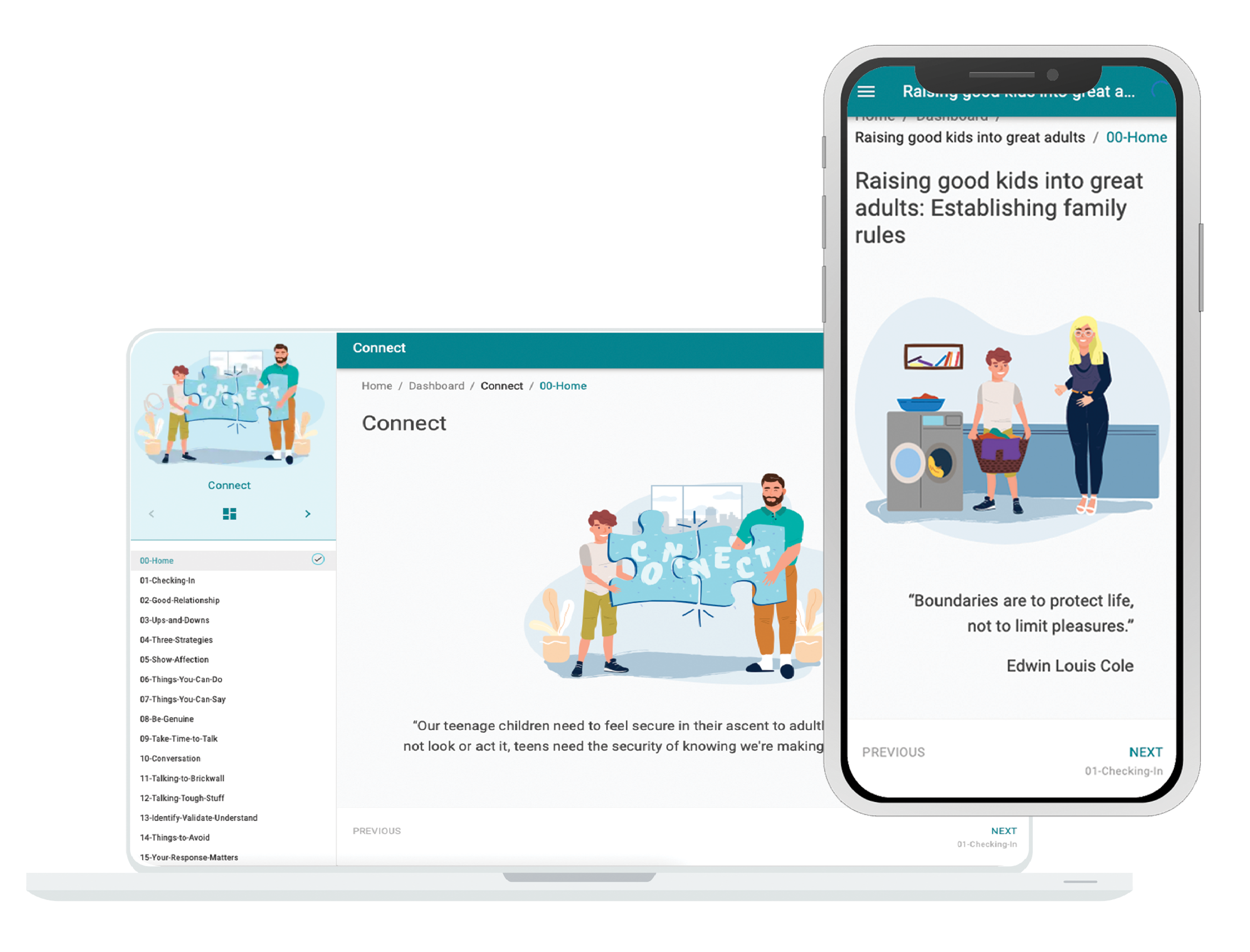
Connect is about empowering you to change your behaviour so you can positively influence your teenager. We’ll talk about ways to build your relationship and communication with your teenager.

We all feel anxious at times, and it’s important for teenagers to learn to manage their everyday anxiety. ‘From surviving to thriving: Helping your teenager deal with anxiety’ will talk about ways that you can support your teenager to cope with the fears and worries they will inevitably face.

Teenagers need the adults around them to set clear boundaries and expectations for their behaviour. This module will help you to establish clear expectations that your teen is likely to follow.

Parents play an important role in helping their teenagers learn to manage conflict. ‘Calm versus conflict’ aims to help you manage conflict at home, to create a safe and supportive environment for your teenager.

As teenagers begin to place greater emphasis on their peers, parents still play an important role in helping their teens to develop social skills. This module helps you to support your teen to develop social skills across a variety of settings.

‘Nurture roots’ is all about finding a balanced way to stay involved in your teenager’s life while also allowing them to ‘leave the nest’ and develop age-appropriate independence.

Getting enough sleep, eating well, being physically active, and not using alcohol or drugs can protect our physical and mental health. This module is all about helping you to support your teenager to develop good health habits.

Problems are a part of life. As teenagers mature, they need to learn strategies to tackle the problems they will face throughout their life. ‘Partners in problem solving’ focusses on how you as a parent can support your teenager to develop good problem-solving skills.

It is normal for a teenager’s mental health to fluctuate. Maintaining the Gains is about how you can support your teen to continue looking after their mental health, even when challenges or setbacks arise.

Will my teenager also need to take part?

The PiP-TEx program is delivered to parents only, your teen won’t be involved in the program.

Responsive
Fits your lifestyle
  • Only 20-35 minutes per online module
  • Entirely online
  • Both desktop and mobile versions available
Fun and interactive
  • Learn practical strategies through interactive activities, and video and audio-based scenarios
  • Work with a PiP coach to implement the strategies you’ve learned
  • Apply your module learnings through weekly goals
Free to join
Joining PiP-TEx won’t cost you a cent!
Interactive
Contribute to the important research on parenting & teen mental health by Monash University